
Basement waterproofing helps protect a basement from unwanted water and moisture. Water can enter through cracks, joints, walls, floors, or other weak areas. Over time, this moisture may cause damp walls, bad odour, peeling paint, and damage to stored items. Basement water leakage can also become worse during heavy rain or when water collects around the building. Proper waterproofing helps control these problems and keeps the basement dry. In this guide, we will explain why basement waterproofing is important, what causes leakage, and what you should check before choosing a waterproofing service.
What Is Basement Waterproofing?
Basement waterproofing is the process of protecting basement walls and floors from water and moisture. It may include surface treatment, crack repair, joint treatment, drainage solutions, or other suitable waterproofing methods. The right method depends on the source of water, basement condition, wall type, and level of leakage. A proper inspection should be done before selecting a waterproofing solution.
What Does Basement Waterproofing Help With?
Basement waterproofing helps protect the basement from water, moisture, and seepage. It can reduce damp walls, water stains, bad odour, and surface damage. Proper waterproofing also helps protect floors, walls, stored items, and building materials from moisture. It supports a cleaner and drier basement and can help prevent repeated water leakage problems over time.
- Water Leakage: Waterproofing work can help control water entering through weak areas.
- Wall Dampness: Proper treatment can help reduce moisture on basement walls.
- Floor Seepage: Suitable waterproofing methods can help address water coming through basement floors.
- Crack Protection: Cracks can be checked and treated based on their size and cause.
- Moisture Control: Waterproofing can help reduce unwanted moisture inside the basement.
Why Is Basement Waterproofing Important?
Basement waterproofing is important because it helps protect basements from water leakage, seepage, and moisture. Water can enter through cracks, walls, floors, and weak joints. Long-term moisture may cause damp walls, stains, bad odour, and surface damage. Proper waterproofing helps control these problems and keeps the basement dry. In Gurugram and nearby Delhi NCR areas, basement waterproofing can help protect residential and commercial properties from common moisture problems. Before starting the work, inspect the basement to find the main source of leakage or seepage.
What Causes Basement Water Leakage?
Basement water leakage can happen for many reasons. Cracks in walls or floors, weak joints, poor drainage, damaged waterproofing, and heavy rain can allow water to enter. Water pressure around the basement can also cause seepage. Finding the exact source is important before starting basement water leakage repair.
Common Causes of Basement Leakage
- Cracks in Walls: Small or large cracks can provide a path for water.
- Floor Cracks: Cracks in the basement floor may allow moisture to enter.
- Poor Drainage: Water may collect around the building when drainage is not working properly.
- Damaged Waterproofing: Old or damaged waterproofing layers may allow water to pass through.
- Heavy Rain: Rainwater can increase water pressure around basement walls.
A professional inspection can help identify the source and condition of the leakage.
How Does Basement Water Leakage Repair Work?
Basement water leakage repair starts with checking the area to find the source of water. Cracks, joints, walls, and floors are inspected carefully. After finding the problem, the damaged area is cleaned and repaired. Suitable waterproofing materials are then applied to stop further water entry. The final step is checking the repaired area for proper protection.
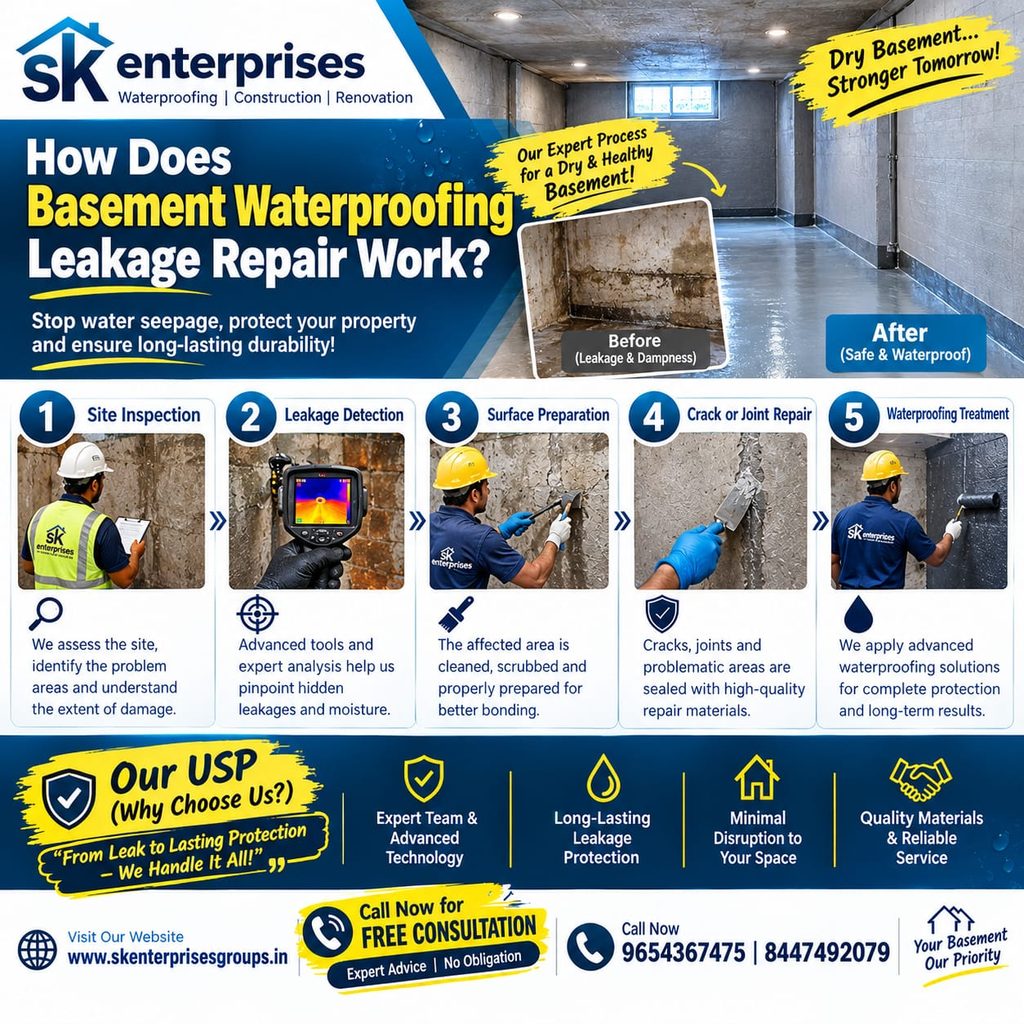
Common Steps in Basement Leakage Repair
- Site Inspection: The basement is checked to find visible leakage and moisture areas.
- Leakage Detection: The possible source of water entry is identified.
- Surface Preparation: Damaged or weak surfaces may need cleaning and preparation.
- Crack or Joint Repair: Suitable materials may be used to treat cracks and joints.
- Waterproofing Treatment: A suitable waterproofing system is selected according to the site.
The exact process should be decided after inspecting the basement.
Why Is Basement Waterproofing Important in Gurugram?
If you need basement waterproofing services in Gurugram, inspect the basement first to identify the source of leakage or seepage. Different buildings may require different waterproofing methods depending on wall condition, drainage, cracks, floor condition, and water pressure. Homeowners and property managers in Gurugram and nearby Delhi NCR areas can discuss the site condition with a local waterproofing service provider before starting the work.
Why Consider SK Enterprises?
SK Enterprises provides waterproofing services for customers in Gurugram and nearby areas. The company can be contacted to discuss basement leakage, seepage, and waterproofing requirements. Before starting the work, explain the leakage problem and allow the site to be inspected. Discuss the proposed waterproofing method, work process, cost, and other project details with the service provider.
Frequently Asked Questions
1. Why is basement waterproofing important?
Basement waterproofing is important because it helps control water leakage, seepage, and moisture. It can also help protect basement walls, floors, and stored items from ongoing water exposure.
2. What causes basement water leakage?
Basement water leakage can be caused by wall cracks, floor cracks, weak joints, poor drainage, damaged waterproofing, or water pressure around the building.
3. How can I repair basement water leakage?
The repair method depends on the source of water. A professional may inspect the basement, identify the leakage source, repair cracks or joints, and apply a suitable waterproofing treatment.
4. Can basement waterproofing stop seepage?
Suitable waterproofing may help control seepage when the source of water is correctly identified, and the right treatment is used. The result depends on the condition and cause of the seepage.
5. When should basement waterproofing be done?
Consider basement waterproofing when you notice repeated leakage, dampness, seepage, water stains, or moisture problems. Getting the basement checked early can help identify the problem before it worsens.
Conclusion
Basement waterproofing is an important part of protecting a building from water and moisture problems. Leakage and seepage can come from cracks, joints, floors, walls, poor drainage, or damaged waterproofing. Identifying where the water is coming from helps you choose a suitable repair method. If you are facing basement water leakage in Gurugram or nearby Delhi NCR areas, consider getting the site inspected before starting repair work. Contact SK Enterprises to discuss your basement waterproofing and leakage repair requirements.

Pingback: 6 Waterproofing Experts for Leakage & Seepage in Delhi NCR