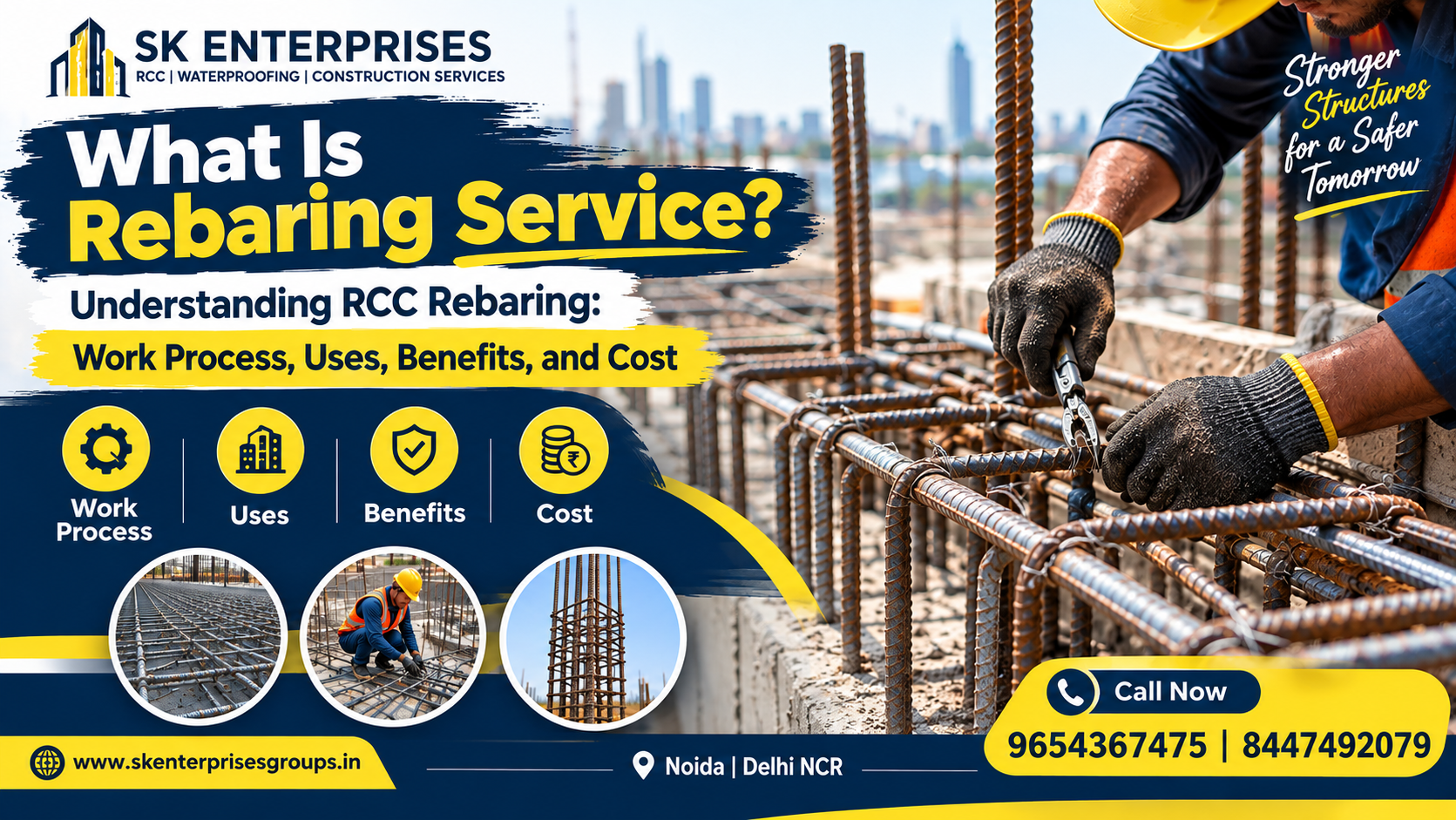
RCC structures need proper reinforcement to support loads and maintain strength. In some construction and repair work, reinforcement bars need to be added, fixed, or extended in concrete structures. This work is commonly known as rebarring service. It may be required for RCC slabs, beams, columns, walls, and other concrete structures. The work needs proper planning, accurate measurements, and suitable methods. In Noida and Delhi NCR, rebaring may be used during construction, renovation, repair, or structural modification projects.
What Is Rebaring Service?
Rebaring service is the work of placing, fixing, or adding reinforcement bars in RCC structures. Reinforcement bars, also called rebars, are used with concrete to provide strength to the structure. Rebaring may be needed when a new RCC element is connected to an existing structure or when additional reinforcement is required for a repair or modification project. The exact method depends on the structure, bar size, location, and project requirements.
Where Is RCC Rebaring Used?
RCC rebaring can be used in different types of construction and repair work.
- RCC Slabs: Reinforcement may be added when a slab needs modification or extension.
- RCC Beams: Rebaring can be used when reinforcement needs to be connected or extended.
- RCC Columns: Additional reinforcement may be required for certain structural work.
- RCC Walls: Rebars can be fixed when connecting new concrete work with an existing wall.
- Structural Modifications: Rebaring may be needed when an existing RCC structure is changed or extended.
The required method should be selected after checking the structure and project needs.
Why Is Rebaring Service Important?
Reinforcement bars play an important role in RCC construction. Concrete is strong under compression, while steel reinforcement helps provide tensile resistance. Properly placed reinforcement works with concrete as part of the structural system. Rebarring becomes important when reinforcement needs to be connected to an existing concrete structure. Poor placement or incorrect bar positioning can affect the planned structural work. Therefore, the bar size, spacing, depth, location, and connection method should be checked before starting the work.
How Does RCC Rebaring Work?
RCC rebarring work starts with checking the existing concrete structure. The required rebar location is marked before drilling. Suitable holes are made, and reinforcement bars are fixed properly. The installed bars are then checked for alignment, depth, and connection. Proper planning helps ensure safe and suitable reinforcement work.
Step 1: Site Inspection
The first step is to inspect the area where rebaring is required. The team checks the concrete surface, structure, work location, and project requirements.
Step 2: Surface and Structure Assessment
The existing concrete is checked to understand its condition. The required reinforcement location, bar size, spacing, and connection details are considered before work starts.
Step 3: Marking the Rebar Location
The required points are marked according to the project plan. Accurate marking helps place the reinforcement at the correct location.
Step 4: Drilling and Rebar Installation
Where applicable, holes may be drilled into the existing concrete. Suitable reinforcement bars and an appropriate anchoring method may then be used according to the structural design.
Step 5: Final Inspection
After the reinforcement work, the installed bars and connections should be checked. The work should match the required drawings, specifications, and site conditions.
Where Is Rebaring Service Used?
Rebaring service is used in different construction, repair, and renovation projects. It can be required for RCC slabs, beams, columns, walls, and building extensions. Rebaring helps connect new reinforcement with existing concrete structures. The exact method depends on the project design, structural condition, and reinforcement requirements.
Common applications include:
- Building Extensions: Connecting new RCC work with an existing building.
- Slab Modification: Adding reinforcement during certain slab-related modifications.
- Beam Connections: Connecting reinforcement for suitable beam-related work.
- Column Work: Installing reinforcement where required by the structural design.
- Wall Construction: Connecting new RCC walls or structural elements with existing concrete.
A qualified professional should check the project before deciding the required rebaring method.
Rebaring Service in Noida and Delhi NCR
Construction and renovation projects in Noida and Delhi NCR may involve RCC slabs, beams, columns, walls, and other concrete structures. During these projects, reinforcement may need to be connected to existing concrete. A rebaring service can help with such reinforcement work. When looking for rebaring services in Delhi NCR, check the provider’s experience, equipment, work process, and site inspection procedure. Before starting, discuss the required bar size, location, drilling method, fixing method, safety arrangements, and estimated cost.
What Affects the Cost of Rebaring Service?
The cost of rebaring service can vary from one project to another. It depends on the work area, number and size of rebars, drilling depth, concrete condition, and site access. Material and labour costs can also affect the final price. Larger or more complex projects may need more time and equipment. A site inspection is useful to understand the actual work and provide a suitable cost estimate.
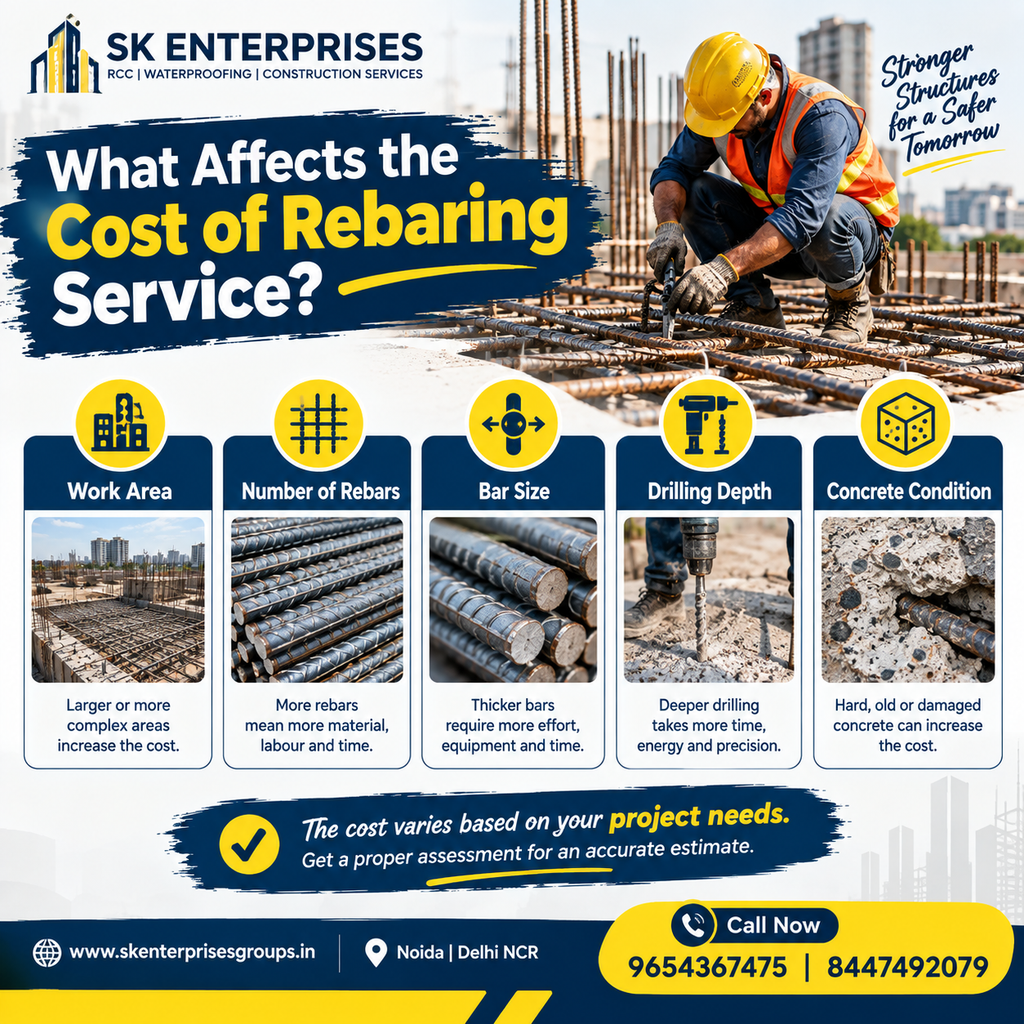
Important cost factors include:
- Work Area: Larger projects may require more labour and materials.
- Number of Rebars: More reinforcement bars can increase the overall work.
- Bar Size: Different bar sizes may have different material and installation requirements.
- Drilling Depth: Deeper drilling may require more time and suitable equipment.
- Concrete Condition: Hard or difficult-to-access concrete can affect the work process.
For an accurate estimate, the actual site and work requirements should be checked first.
Frequently Asked Questions
1. What is rebaring service?
Rebaring service involves placing, fixing, adding, or connecting reinforcement bars in RCC structures according to the project requirements.
2. How does RCC rebaring work?
The process usually includes site inspection, marking, checking the concrete, drilling where required, installing reinforcement, and final inspection.
3. Where is rebaring service used?
Rebaring may be used for RCC slabs, beams, columns, walls, building extensions, renovation, and other structural modification work.
4. How much does rebaring service cost?
The cost depends on the work area, number and size of rebars, drilling depth, concrete condition, materials, labour, and site requirements.
5. How do I choose a rebaring service provider?
Check the provider’s experience, equipment, site inspection process, safety practices, work method, and cost estimate before starting the project.
Conclusion
Rebaring service is useful when reinforcement bars need to be added, fixed, or connected in RCC structures. It can be required for slabs, beams, columns, walls, extensions, repairs, and renovation projects. The process needs proper inspection, marking, drilling, material selection, and installation. Cost also depends on the project size, reinforcement requirements, concrete condition, and site access. If you need a rebaring service in Delhi NCR, discuss your project requirements and site condition with a professional service provider before starting the work. Need RCC Rebaring Service in Delhi NCR? Call SK Enterprises